
Prevent psychological injury: tackle psychosocial hazards early and repeatedly

Risk Matters - Winter 2026

Psychological injury doesn’t typically begin with a single moment; it builds when the day-to-day job keeps asking more than people can sustainably give. Local government managers will recognise the pressure their teams deal with, constant community visibility, competing priorities, and the expectation to stay responsive across hybrid teams.

That’s exactly why psychosocial hazards are currently in the spotlight for LGIS members, because psychological injury risk can be reduced by identifying and fixing the conditions that create them. A bonus for employers is that addressing psychosocial hazards makes for mentally healthy workplaces which time and time again have proven to be more productive, efficient and generally happier.

Managing psychosocial hazards means tackling the work factors that can create harm in the first place – excessive job demands, low work control, poor support, and value conflict. When these conditions are left unaddressed, burnout becomes more likely, which can present as a sense of dread and cynicism about work, with real impacts on engagement, turnover risk, performance, and personal health.

Prevention is therefore the practical “go-to” solution: designing work so people can raise concerns early, have honest and respectful conversations about workload and priorities, and recover properly outside work hours.

Psychological safety is a key enabler – when people feel safe to speak with curiosity rather than fear, teams express problems sooner and can fix underlying conditions quicker.

Other sections in this season's Risk Matters

Where we’ve been – Winter 2026

Congratulations to the Shire of Kellerberrin on receiving the Tier 2 Diligence in Safety Award. CEO James Sheridan visited the Shire earlier this month to meet the team and present the award. The award recognises strong results through LGIS’s ‘3 Steps to Safety’ program.
Read More »

Hiring third-party equipment?

From marquees, stages and sound systems to temporary fencing, generators, catering equipment and vehicles, third-party asset hire is a practical way to meet short-term needs without owning everything year-round.

Read More »

Understanding the Reasonable Administrative Action exclusion in the Workers Compensation and Injury Management Act 2023 (WA)

The Workers Compensation and Injury Management Act 2023 (WA) introduced a significant change to the assessment of psychological injury claims in Western Australia. While the Act retains a broad definition of injury, section seven contains a new exclusion for psychological and psychiatric disorders arising from ‘reasonable administrative action’ taken by an employer.

Read More »

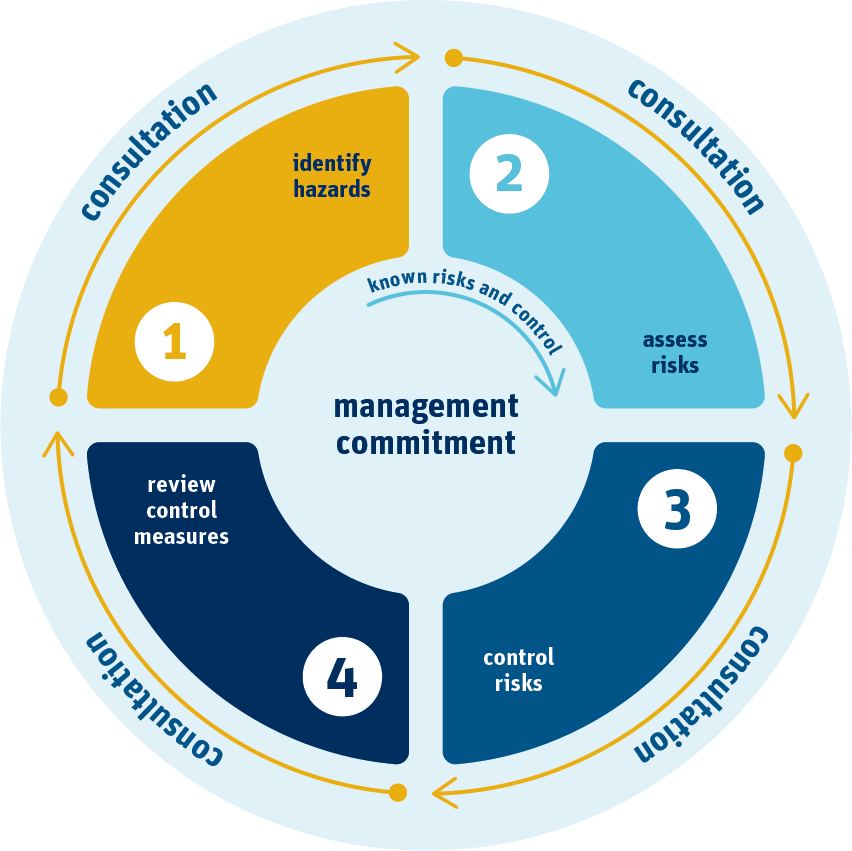
To put prevention into practice, local governments can apply a risk management approach, which is made up of four steps.

Identify psychosocial hazards, assess the likelihood and severity of harm, choose the
most suitable response, then monitor and review controls to ensure they remain effective.

How to get started – managing psychosocial hazards

DIAGRAM: Risk management approach process
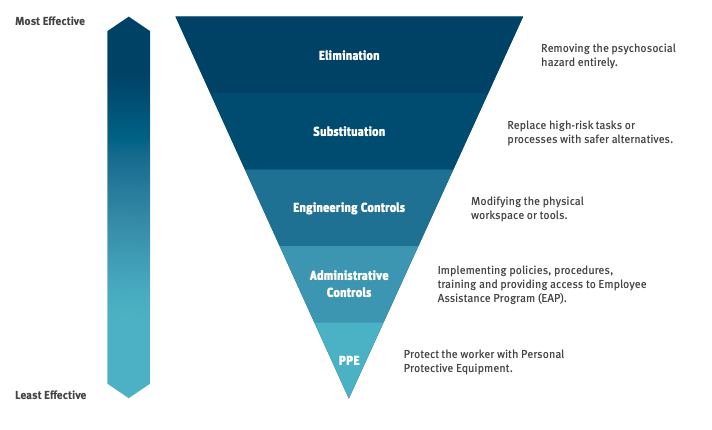
DIAGRAM: Hierarchy of controls

PRACTICAL EXAMPLE

When ‘urgent’ never ends: managing cognitive work demands in local government procurement

Jane is a procurement officer who manages contracts and purchasing for several local government departments, including infrastructure, community services, and environmental projects. The role involves reviewing complex tender documents, checking compliance with procurement policies, negotiating with suppliers, and overseeing multiple contracts at the same time.

With several large infrastructure projects now underway, tight deadlines and strict budget controls have significantly increased Jane’s workload. Jane must keep pace with changing regulations, meet varied stakeholder expectations, and respond to urgent procurement requests. The work is mentally demanding, requiring constant multitasking, problem-solving, and high-stakes decision- making under pressure.

Impact on individual

Jane is experiencing mental fatigue because the work demands are constant and mentally draining. As concentration drops, it becomes harder to stay accurate, and occasional mistakes increase anxiety about possible financial or legal consequences. Tight deadlines and urgent requests add pressure, and Jane often works late to keep up. Over time, the lack of recovery is affecting wellbeing. Jane is showing signs of burnout, including irritability, poor sleep and reduced motivation. Jane feels overwhelmed and is increasingly unsure the current pace is sustainable in the long term.

What should Jane’s employer do?

Jane’s employer has a responsibility to identify and address risk in the workplace, including psychosocial risks. By applying the risk management approach people leaders can identify the risks and implement controls. Let’s look at what that would practically look like in this example:

Step 1: Identify the risk

Jane is exposed to an ongoing risk from sustained high cognitive work demands. The job requires complex tender review, compliance checks, supplier negotiation, and managing multiple contracts across departments. Several large infrastructure projects are now underway, which is increasing Jane’s workload and time pressure. Tight deadlines, strict budgets and frequent interruptions mean Jane is constantly switching tasks. Early warning signs are already present: fatigue and strain, reduced focus, anxiety about consequences, late hours and poor sleep, irritability and reduced motivation.

Step 2: Assess the risk

The likelihood of harm is high because Jane’s exposure is frequent, prolonged, and escalated during peak project periods, with limited opportunity to recover. Clear warning signs are already present, including fatigue, sleep disruption, anxiety, and reduced concentration, which suggests the risk is already developing rather than being a future possibility. The impact is significant because mistakes in procurement and contract work can trigger rework, delays, and compliance issues, while ongoing pressure can reduce performance and sustainability. The risk should be rated using impact and like

Step 3: Control the risks

The priority should be to reduce overload at the source and reduce the consequences of errors, while also supporting Jane’s wellbeing. This would result in changes to the way work is planned and prioritised, this could include (but is not exclusive to) the following:

Organisation and process changes

  • Set clear parameters for what is truly “urgent” versus what can be scheduled, so urgent requests don’t constantly override planned work.
  • Plan peak workloads (e.g., known infrastructure tender periods) and adjust timelines or resourcing where possible.
  • Ensure that there is adequate planning and time allocation for tasks that require a higher degree of concentration (tender evaluation, contract checking).
  • Implement additional measures to ensure processes are effective (checklists, peer review, or clear sign-off points) to reduce the impact of fatigue-related errors.

Support for the worker

  • Regular check-ins focused on wellbeing, workload and capacity, with increased frequency when there are multiple projects.
  • Ensure that the worker is not working excessive hours and is taking appropriate breaks and leave so fatigue does not build week to week.
  • Provide coaching on prioritising, delegation and time management if required, without removing the workers ability to self-manage. This should not be relied on as the only control.
 

Step 4: Review the control measures

Review whether the controls are working in practice – not just on paper. Schedule reviews, frequent check- ins particularly during peak tender periods. If the risk remains high, strengthen controls by adjusting timelines, resourcing, approvals and workflow design.

Role of the manager

Jane’s manager plays a central role in reducing psychosocial risk and helping Jane sustain performance. The manager should encourage open and honest communication so Jane can flag workload pressure, fatigue, and concerns about errors early, without fear of judgement.

The manager also needs to provide practical support and guidance, such as clarifying priorities, setting realistic timeframes, and ensuring time for high concentration tasks. Regular check ins can help mitigate these issues and reduce the likelihood of burnout.

Here are some examples of actions Jane’s workplace can use to manage workload demands and reduce the risk of excessive cognitive load by applying the hierarchy of controls (starting with elimination and substitution, then strengthening systems and ways of working, and finally supporting people through administrative measures).

Control Measures

Elimination: Review project timelines and resource allocation to prevent unrealistic deadlines and excessive workload.

Substitution: Use procurement software and automation tools to reduce manual processing and cognitive load.

Engineering controls: Design workflows and information systems that simplify decision-making and reduce complexity.

Administrative controls: Provide regular supervision or coaching to support cognitive workload management and early identification of any potential issues, prioritise tasks and delegate where possible.

Psychological injury

Workplaces must actively control psychosocial hazards because they arise from how work is designed, managed and supported, and can create sustained, unmanaged strain. A common management mistake is trying to “fix the person” while ignoring the work environment, even though changing the environment often drives sustainable improvement.

Practical controls include fostering a respectful, supportive culture; learning from failures; reducing unplanned work; removing roadblocks; investing in development; and empowering people to make decisions around their role and workload.

Without these improvements, burnout becomes more likely, job satisfaction falls, productivity declines, and physical and psychological health are harmed. This can cause psychological injury (e.g., depression and anxiety).

Psychological injury trends

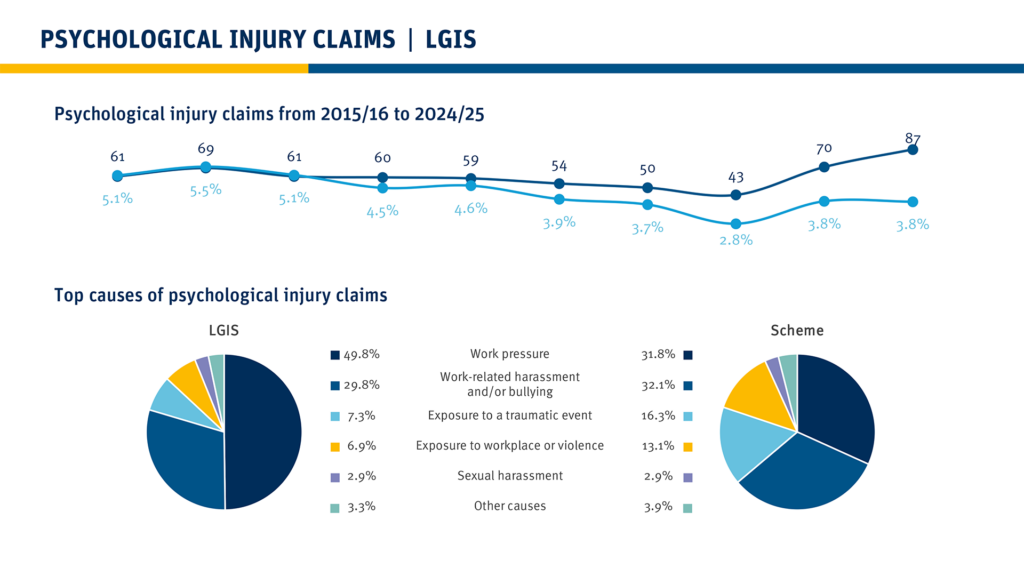
Psychological injuries are rising across the local government sector, continuing a consistent upward trend over the past decade. At LGIS, total psychological injury claims have increased 30% since 2015/16 (from 61 to 87), with a pronounced spike in the past two years (from 43 to 87). Within these totals, work pressure accounts for 49.8% of psychological injury claims, meaning almost one in every two LGIS psychological injury notifications is pressure related.

These claims are commonly caused by increased job demands, an unsupportive work environment, work overload and perceived lack of fairness. Compared to the broader Scheme, where work pressure represents 31.8% of total claims, LGIS is seeing a higher concentration of pressure-related psychological injuries. Harassment and abuse are also prevalent and account for 29.8% of total psychological injury claims, reinforcing the need to address both psychosocial workload factors and respectful workplace behaviours across local government members.

Behind these numbers are real workplace experiences – the case study following illustrates how bullying and harassment can escalate into a psychological injury claim.

CASE STUDY: From intimidation to injury, why early action matters

Over several weeks, a worker becomes the target of repeated abusive behaviour from a colleague. In meetings, handovers and informal check-ins, the colleague yells, makes degrading comments about the worker’s competence, and intimidates the worker (standing over them, threatening job security, and humiliating them in front of others). The behaviour becomes predictable, and the worker starts to anticipate incidents and feel anxious before coming to work.

As the pattern continues, the worker shows clear impacts: reduced concentration, hypervigilance, reluctance to speak up, and withdrawal from team communication to avoid being singled out. Sleep is disrupted and mood deteriorates, with persistent worry accompanied by physical stress symptoms such as headaches or stomach upset.

The worker reports the conduct through appropriate channels, outlining what occurred, when it happened, and who witnessed it. The report is treated seriously, and an investigation begins to confirm events and determine required actions. The worker worries about backlash; the Code of Conduct states retaliation for raising a good-faith concern is not tolerated, including intimidation or negative changes to job responsibilities.

Despite the investigation commencing, the worker’s health declines due to prolonged exposure. A medical assessment diagnoses a psychological injury linked to the repeated abusive conduct. The matter is no longer only a conduct or performance issue – it has caused harm and requires both behavioural action and health, safety and wellbeing management. In these circumstances, the psychological injury may be compensable. Early reporting and proactive action give employees the chance to investigate, stop the behaviour and support the affected worker, potentially before there is a claim. In this case if the harassment had been addressed early, the claim may have been avoided.

Next steps

We support members by providing services that foster respectful workplace behaviours and open communication, addressing common pressure points such as workload, clear boundaries between work and personal time, and the importance of using breaks and leave for recovery.

To learn how LGIS can support your organisation to prevent psychological injury by identifying and managing psychosocial hazards – through services focused on respectful workplace behaviours, open communication, workload and boundaries – contact the People Risk Team at [email protected].

Other sections of this season's Risk Matters

CEO’s Message – Winter 2026

This year marks the significant milestone of the 30th anniversary of LGIS. It’s an opportunity to reflect on the remarkable journey we have undertaken together over the past three decades. Since our founding in 1995, LGIS has evolved from a practical response to emerging risks into a pioneering mutual scheme that proudly serves the diverse needs of Western Australia’s local governments.

Read more »