30 Years of LGIS

Risk Matters - Winter 2025

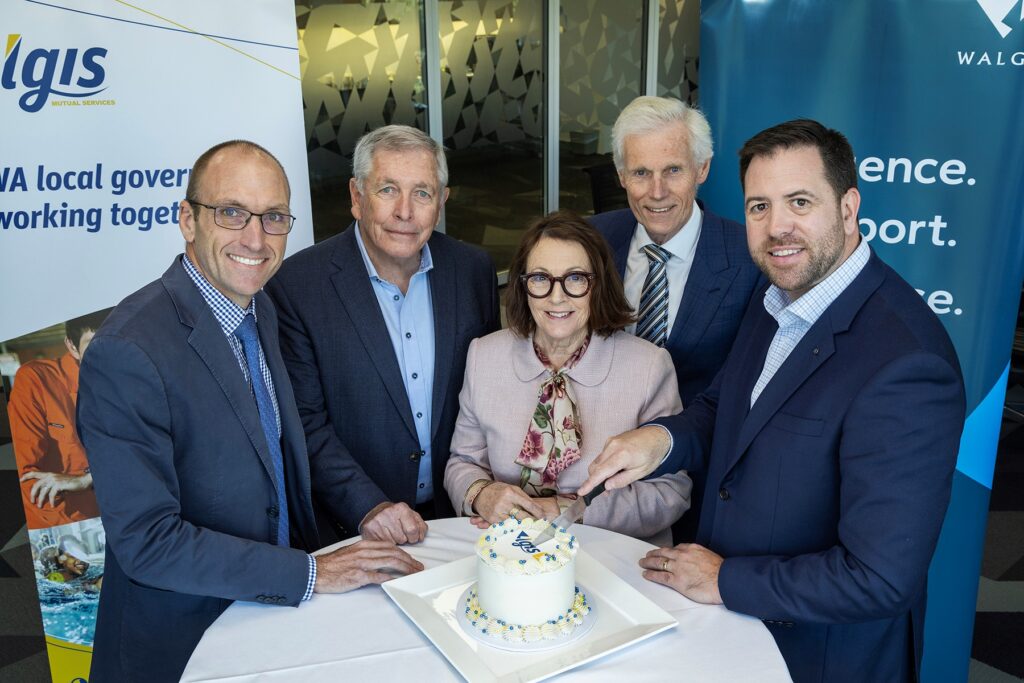
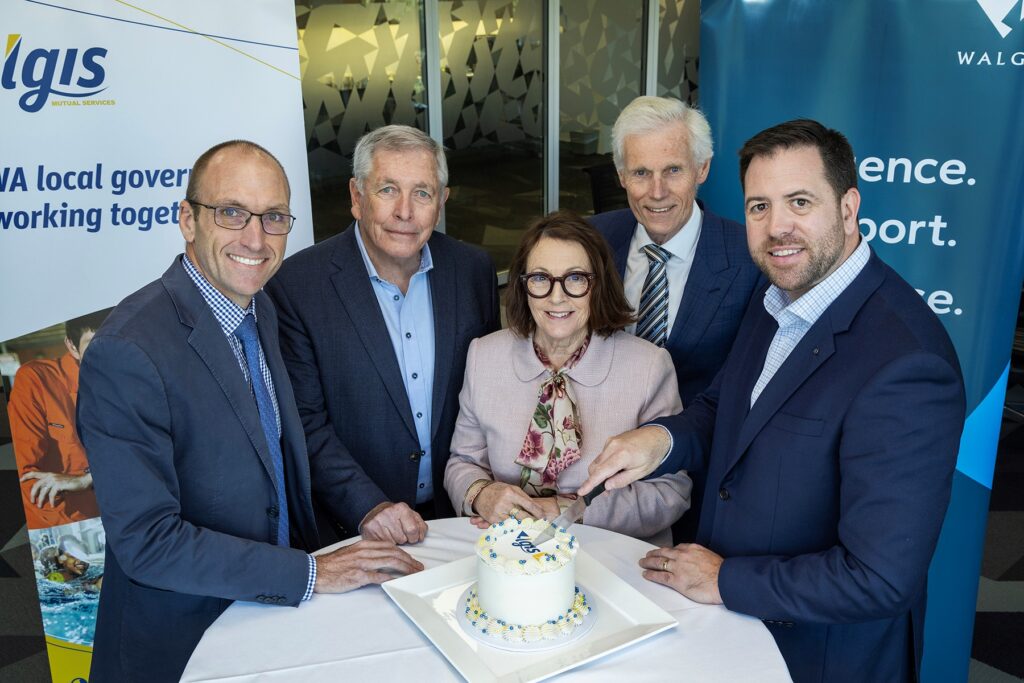
1 July 2025 marked an historic moment for LGIS, on the same day 30 years ago that the Scheme launched. A lot has changed over that time, but the core purpose remains – local governments working together through a mutual to protect their people, organisations and communities.

LGIS was born from necessity, when the commercial insurance market withdrew cover and costs were escalating. WA local governments banded together to protect themselves making sure that they would always have access to appropriate, affordable and sustainable protection. The reasons that LGIS was formed still exist today – confirming that the mutual indemnity scheme remains the best option to protect WA local governments.

Other sections in this season's Risk Matters

Where we’ve been – Winter 2025

Congratulations to the Shire of Yilgarn who were award their Tier 3 Silver diligence in Safety Award. James Sheridan, CEO LGIS and Christ Gilmour, Risk Specialist – Regional visited the Shire on Tuesday 26 February to meet the Yilgarn team and present the award.

Read More »

When do we defer a workers comp claim?

Stopping income compensation payments can be a tricky matter for LGIS members to determine. We’re aware there’s a growing number of local governments that have stopped payment when they shouldn’t have, leading to a large back pay bill and potential $10,000 fine from WorkCover WA.

Read More »

Stopping income compensation payments? Beware!

Stopping income compensation payments can be a tricky matter for LGIS members to determine. We’re aware there’s a growing number of local governments that have stopped payment when they shouldn’t have, leading to a large back pay bill and potential $10,000 fine from WorkCover WA.

Read More »

Early days – a solution for local government, by local government

In 1995, the local government insurance landscape in Western Australia faced significant challenges. Prior to the establishment of LGIS, then known as Local Government Insurance Services, many local governments struggled with rising insurance premiums, limited coverage options, and certainly no tailored risk management services.

The sector was predominately insured through the SGIO, then the State Government Insurance Office, and the traditional insurance market was dominated by commercial entities, with international insurers trying to infiltrate the market. None of these options were able to meet the specific needs of local governments, leading to concerns about financial sustainability and the ability to manage risks effectively.

The need for LGIS

Several factors contributed to the need for LGIS:

1. Rising insurance costs: Local governments were experiencing steep increases in insurance premiums, which strained their budgets and impacted their ability to provide essential services to their communities.

2. Limited coverage:
The available insurance products often did not adequately cover the unique risks faced by local governments, such as liability for public works, property damage, and other operational risks.

3. Increased risk exposure:
As local governments took on “more responsibilities and expanded their services, their exposure to various risks increased. These included risks associated with infrastructure development, community services, and environmental management.

4. Need for tailored solutions:
Local governments required insurance solutions that were specifically designed to address their unique operational challenges and risk profiles, rather than relying on generic commercial insurance products.

5. Desire for self-management:
There was a growing recognition among local governments of the benefits of self-insurance and risk management. By pooling resources and sharing risks, local governments could achieve greater financial stability and control over their insurance needs.

In response to these challenges, the local government associations (now the WA Local Government Association (WALGA) initiated the creation of LGIS as a self-insurance scheme. This allowed local governments to collaborate, share risks, and access tailored insurance and risk management services, ultimately leading to more sustainable and effective management of their insurance needs. Where a private insurer would have tens of thousands of clients, LGIS would have 149!

Through the gradual introduction of key services, LGIS would become a one-stop-shop mutual scheme that served the WA local government sector, anticipating their every need and protecting them from risk.

The establishment of LGIS marked a significant shift in how local governments in WA approached risk management and insurance, providing them with a dedicated resource to address their specific challenges. How then did it all start?

Our journey: the key developments of LGIS

The birth of LGIS: the parliamentary process and a pioneering moment in local government insurance.

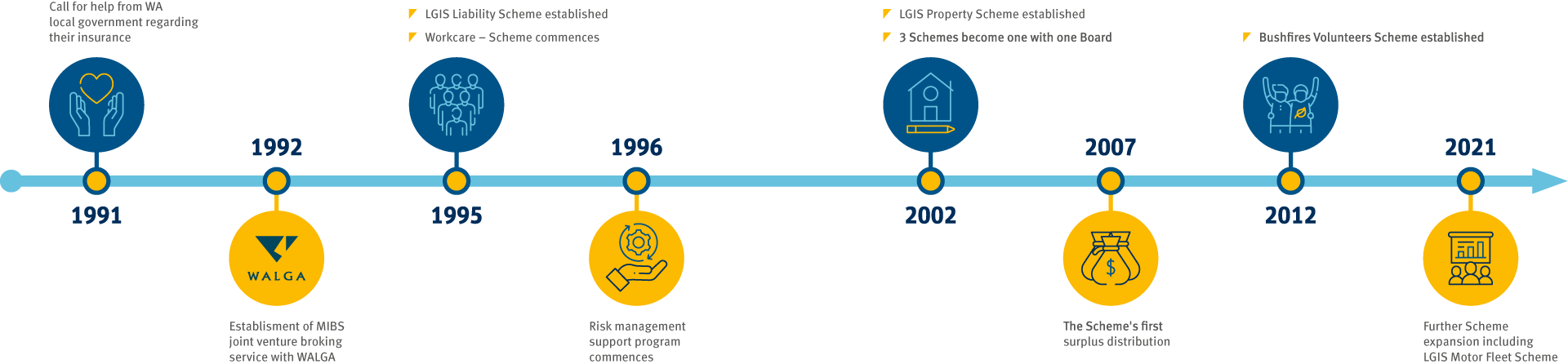
In the earliest days, LGIS was nothing more than a group of forward-thinking local government leaders united by a shared idea. Converting that idea into a reality required extensive planning and a multidisciplinary, collective legislative effort. This was when our early industry champions at the WA Municipal Association (WAMA) partnered with insurance specialists, Jardine, to form the broking operation, then known as MIBS (Municipal Insurance Broking Services). This collaboration would become the incubator for the mutual indemnity scheme, now known as LGIS.

The challenge continued as the Association tirelessly advocated the merits of the Scheme to future members all across the state and engaged in numerous government meetings, until the concept was finally introduced to parliament. Understandably, many local governments were apprehensive, and some in the political sphere had a vested interest in preserving the existing insurance status quo.

However, on Thursday 25 May 1995 at 10:50 am, the Minister for Local Government, the Hon. Paul Omodei MLA initiated his second reading of the Local Government Amendment Bill, laying the foundations for the institution we are all part of today. It was just one month later that the mutual emerged, announcing the municipal WorkCare and Liability schemes.

WorkCare: a new approach to injury management

One of the goals of the WorkCare scheme was to create a unified, proactive approach to injury management that benefited all members. From the outset, LGIS recognised that the cost of injury and illness claims extended beyond workers’ compensation premiums. This understanding sparked a renaissance in how WA local governments managed liabilities related to worker rehabilitation and compensation.

What LGIS offered:

  • Expert advice to help local governments reduce the occurrence and severity of injuries and illnesses.
  • Support in managing, investigating, and resolving claims efficiently.
  • Assistance in rehabilitating injured employees, with a focus on reducing absenteeism and helping staff return to work safely. Legal representation and counsel for claims related to workplace injuries or illnesses.
  • Financial grants to support employee rehabilitation efforts.

Following the launch of WorkCare, local governments were able to better manage and coordinate the efficient and cost-effective processes of minimising the risks associated with worker injury and illness. LGIS made the treatment and rehabilitation of workers in a timely, yet conscientious manner a priority. This was crucial in returning individuals to work in a safe and controlled environment, improving the efficiency of local government.

Liability Scheme: more than just ‘insurance’

LGIS’ Liability Scheme complemented WorkCare by offering a comprehensive, long-term solution that went far beyond traditional insurance. It not only provided protection against legal claims but also embraced a total risk management philosophy. Covering public liability, professional indemnity, legal defence costs, and risk reduction support, the Scheme helped local governments mitigate financial risks in a cost- effective way.

What truly set LGIS apart was its sustainability. Inspired by successful models in South Australia, the Scheme was designed to meet WA’s unique needs without causing large fluctuations in contributions. As a mutual organisation initially serving 126 members, LGIS fostered a circular economy, protecting its members through:

  • Extended cover: Levels of cover surpassing typical coverage levels at the time. This service continues to this day with LGIS securing protection for members far beyond what they could otherwise attain as individual organisations.
  • Risk reduction services: Free, comprehensive risk management support aimed at preventing claims before they happen.
  • Unique fund structure: Each Scheme was managed independently, with surpluses being refunded to members (over $60 million has been returned to members since 2007). This marked a fundamental transition away from the profit- driven models of traditional insurers, focusing instead on shared cost and risk mitigation.

This innovative approach helped local governments build a resilient, sustainable future, protecting their communities and their budgets alike.

The 1997 Brookton bushfire: an early test for LGIS

When the Scheme first formed, actuaries projected that we could comfortably handle one major catastrophe every 10 years. However, within just its second year of operation, LGIS faced a significant natural disaster.

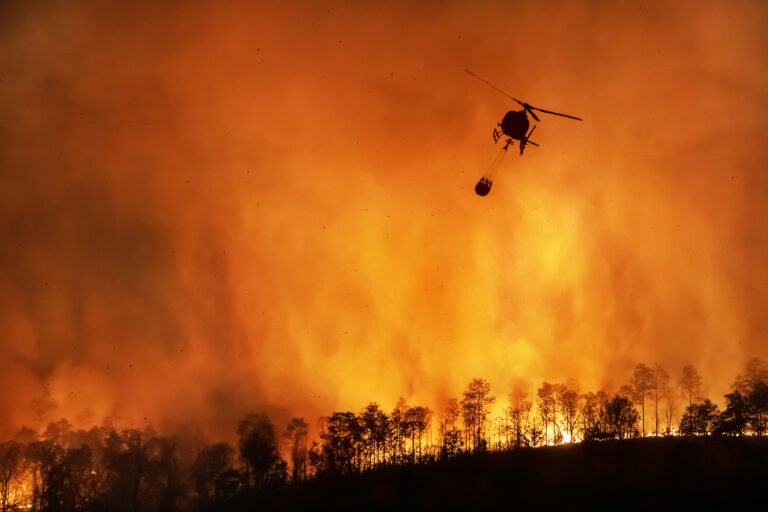
Fire fighting helicopter carry water bucket to extinguish the forest fire

The 1997 Brookton bushfire remains one of Western Australia’s most devastating wildfire events. Occurring in just the second year of the sector’s pioneering self-insurance mutual scheme, this catastrophic event tested the resilience of the model, offering vital lessons in risk management, financial stability, and community cooperation.

The fire highlighted the critical importance of strong risk pooling and proactive planning within the sector and Scheme. It also underscored the importance of strong community driven leadership and the  strategic utilisation of reinsurance frameworks. The event reiterated the need for adaptive risk assessment and reinforced the value of mutual support in safeguarding member interests during unforeseen crises.

The consequences were profound, as a result, catastrophe (liability) insurance expenses surged from $1,025,000 in 1998 to $2,420,000 in 1999. This prompted the mutual to adapt quickly to both the evolving climate and ever-increasing risk landscape. But the bottom line was that the mutual stood up to this challenge and prevailed. 

Expanding the mutual model: LGIS Property Scheme launches (June 2002)

In 2001 H.I.H, the country’s second-largest insurance company collapsed, marking the largest corporate failure in Australian history. The events of 2001 exposed the vulnerabilities of relying solely on private insurers and heightened risk awareness across the local government sector.

Many local governments found themselves in the position of being unable to secure insurance for their assets, or that the renewal premiums asked were extensive. To support the sector LGIS took a bold step forward! On 30 June 2002, we launched the Municipal Property Scheme, expanding the mutual model to cover property. While initially a risky move, since the Scheme relied entirely on member contributions, the decision paid off. It resulted in a more comprehensive and tailored coverage for members, offering protection against a wide range of risks including electronic equipment, machinery breakdown and property damage.

Today, LGIS employs a team of dedicated senior claims consultants who specialise exclusively in property. Whether it’s a mobile phone or a recreational facility, LGIS ensures local governments are protected against the unexpected, providing peace of mind and financial security.

Supporting our bushfire volunteers (July 2012)

In July 2012, LGIS recognised the vital role of volunteer bushfire fighters and took a significant step to support them. The Scheme was expanded to include a dedicated bushfire volunteer personal injury fund – marking a further extension of the mutual model. This new pooled fund provided statutory injury cover for volunteers, protecting local governments from liability in the case of injury during bush firefighting activities.

This move was crucial! Following a spike in incidents, mainstream insurers had begun pulling cover for volunteer firefighter injuries, leaving local governments vulnerable. By integrating bushfire volunteer cover into the existing scheme, LGIS acknowledged the critical contribution of these volunteers and ensured they had the necessary support to perform their duties safely and confidently.

LGIS’ commitment to volunteer safety reflects a broader strategy to strengthen community resilience. This initiative not only offered peace of mind to volunteers but also highlighted the importance of proactive risk management in an era of increasing climate-related challenges. It represented a vital step forward in safeguarding those who protect our communities from the front lines of disaster. In 2025 WA recorded over 26,000 volunteer bush fire fighters dispersed over 560 local government brigades!

LGIS Motor Fleet Scheme launches (June 2021)

LGIS expanded its services once again! This time to include motor vehicle and plant insurance. From this point forward, LGIS would cover not only property damage caused to insured vehicles and equipment, but also any damage to third-party vehicles or property resulting from the use of local government vehicles.

2021/22 marked the first full year of managing motor-related claims under the mutual scheme. We processed 1018 claims in what was a busy year filled with valuable lessons. Despite the learning curve, it proved to be a successful period for LGIS, demonstrating just how comprehensive and adaptable the mutual scheme can be for its members. This expansion reinforced LGIS’s commitment to providing broad, reliable coverage that meets the evolving needs of local governments.

What’s makes LGIS so special?

Many people mistakenly believe that risk management is a business solely about preventing action and initiatives. What makes LGIS so special is that we redefine that perspective by actively enabling our members to thrive. We take a cooperative approach, cultivating a deep understanding of the needs and priorities of local governments across Western Australia. Rather than waiting for something bad to happen, we proactively work to prevent it from ever happening in the first place.

Over the past 30 years, our commitment to social engagement and extensive collaboration with members has transformed our original shared vision into a tangible reality. Today, in 2025, our full membership across WA stands as a great testament to the success that local governments can achieve when they work together. Where commercial insurance companies treat their clients just like a number, from the very beginning we fostered a family-like relationship with our members – building trust through the gradual introduction of services and the constant delivery of promises.

Looking ahead, LGIS remains dedicated to working alongside, and providing the best possible service to all local government members in Western Australia. Together, we will continue to innovate, collaborate and serve with the same reliability and passion that defined us over the past 30 years.

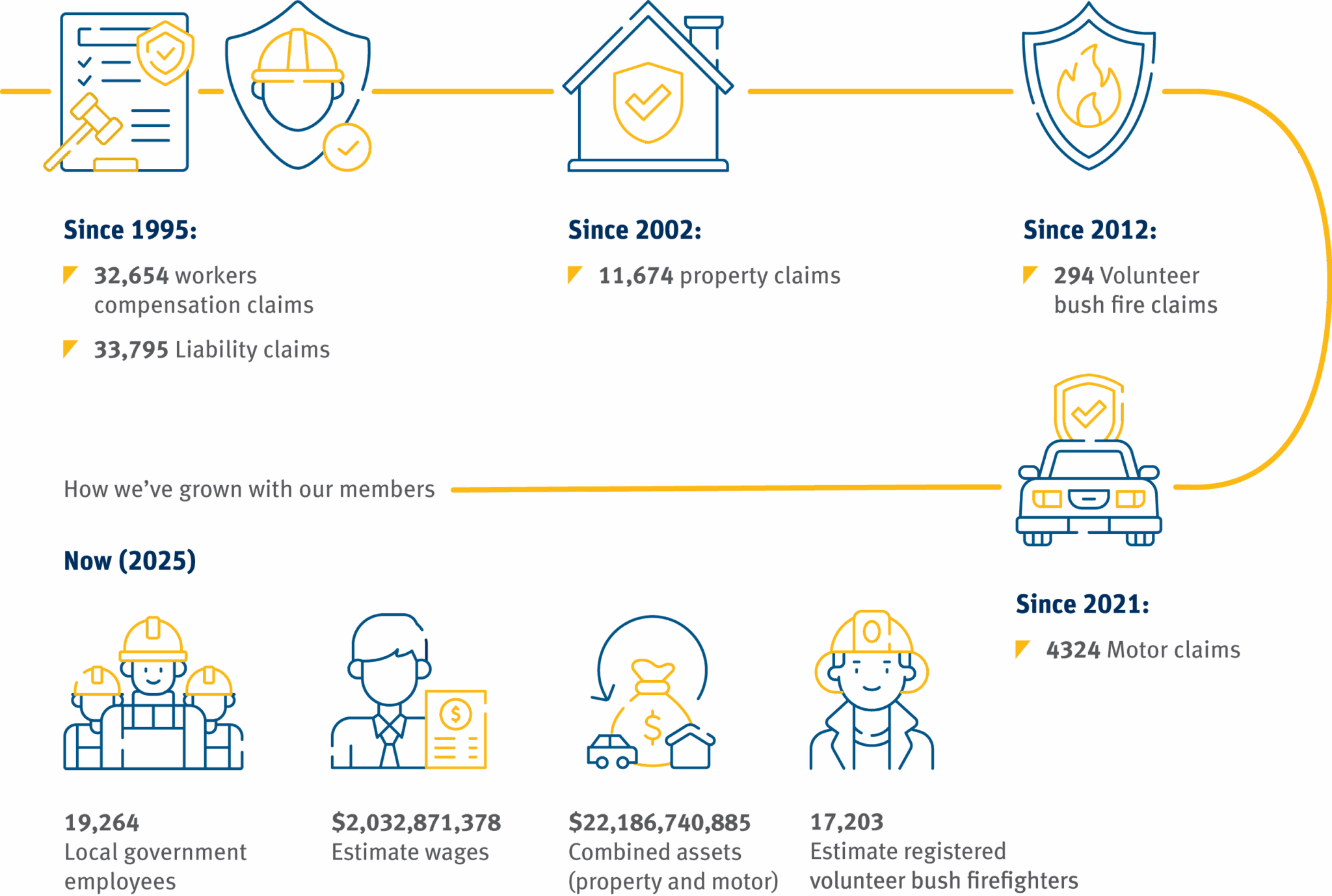
LGIS at a glance

In our 30-year history, we’ve continually supported our members. From the introduction of each individual service to the time of writing this publication, we have successfully closed:

Innovating for the sectors emerging risks

As we look forward to the next decade, we’re excited to see what the future holds for LGIS and our members. Our Board of Directors have adopted the 2025-2028 strategic plan and the operating environment for the sector is evolving and complex. Our members can rely on LGIS, we’ve been here for 30 years, and we’re committed to ensuring the long-term sustainable protection for the sector now and in the decades to come.

Keep an eye out for announcements on the following services:

Cyber risk – Phase 4

We continue to support members in improving their cyber security position with services to be launched that include incident management simulations, ASD 8 gap assessments and supply chain assessments. Members will be able to choose the service that best meets their organisation’s needs.

Expanded injury prevention services

Our expanded service will allow more members to access in-person injury prevention services every year. By getting out on the ground and strategically working with members to target their areas of concern, we’re aiming to mitigate injuries and musculoskeletal claims, making local government a safer place to work.

More information

Talk to your account manager or regional risk specialist for more information on LGIS services and how we can support your local government. 

Share on Twitter
Share on LinkedIn

Other sections of this season's Risk Matters

CEO’s Message – Winter 2025

This year marks the significant milestone of the 30th anniversary of LGIS. It’s an opportunity to reflect on the remarkable journey we have undertaken together over the past three decades. Since our founding in 1995, LGIS has evolved from a practical response to emerging risks into a pioneering mutual scheme that proudly serves the diverse needs of Western Australia’s local governments.

Read more »

30 Years of LGIS

1 July 2025 marked an historic moment for LGIS, on the same day 30 years ago that the Scheme launched. A lot has changed over that time, but the core purpose remains – local governments working together through a mutual to protect their people, organisations and communities.

Read more »