Harnessing machinery ergonomics: a key strategy in preventing workplace injury

Risk Matters - Winter 2025

Harnessing machinery ergonomics: a key strategy in preventing workplace injuries

Research from the BMC Public Health Journal conducted in 2024 indicated that 61.75% of truck drivers develop some form of musculoskeletal disorder (MSD) during their career.

This alarming statistic will almost certainly be applicable to the wide range of roles undertaken by the local government sector throughout WA. From sweeper and roller operators to rangers and parks and gardens workers, many may be affected in some way by MSD injury from the often sedentary yet physically demanding nature of their roles.

Over the past five years, LGIS has seen a steady increase in the number of hazardous manual task related claims:

  • Parks and gardens workers – 283 claims 
  • Machine operator – 218 claims
  • Other trade workers – 183 claims

Other sections in this season's Risk Matters

Where we’ve been – Winter 2025

Congratulations to the Shire of Yilgarn who were award their Tier 3 Silver diligence in Safety Award. James Sheridan, CEO LGIS and Christ Gilmour, Risk Specialist – Regional visited the Shire on Tuesday 26 February to meet the Yilgarn team and present the award.

Read More »

When do we defer a workers comp claim?

Stopping income compensation payments can be a tricky matter for LGIS members to determine. We’re aware there’s a growing number of local governments that have stopped payment when they shouldn’t have, leading to a large back pay bill and potential $10,000 fine from WorkCover WA.

Read More »

Stopping income compensation payments? Beware!

Stopping income compensation payments can be a tricky matter for LGIS members to determine. We’re aware there’s a growing number of local governments that have stopped payment when they shouldn’t have, leading to a large back pay bill and potential $10,000 fine from WorkCover WA.

Read More »

In response, our expert injury prevention consultants recently put together a helpful video to guide operators through the best strategies to reduce the risk of future injury when operating machinery. Through the correct ergonomic setup of seats, controls and levers, mirrors and cameras, as well  as the adoption of other general good practice procedures, workers can mitigate some of the risks. Access this valuable resource on the LGIS website. 

There are many potential hazards associated with a poor understanding of machinery ergonomics and a relaxed attitude towards general health and wellbeing. Good ergonomic setup, combined with healthy habits like stretching and maintaining a balanced diet will help you to work more safely and more comfortably. 

It is important to be mindful of preventative solutions that can be installed, adapted, and retro-fitted to equipment and machinery. At the forefront of this guide, individual preference and an understanding of the variation in adjustability from machine to machine should be applied while finding a system of practice that works for you.

This is general advice only, we encourage you to always check the manufacturers operator’s manual for specific machinery use guidelines. This should be available for all plant equipment.

What are the risks based on our data?

Over the past five years, there have been 218 claims related to body-stressing injuries within the sector. Notably, machine operators rank as the second highest risk occupation for such injuries, surpassed only by workers in parks and gardens.

The elevated risk for machine operators stems from several hazardous characteristics inherent to the role. 

These include maintaining sustained postures that strain the back and legs, performing highly repetitive movements involving the wrists, hands, and fingers, and adopting awkward postures when operating machinery or accessing and egressing equipment. Additionally, exposure to whole-body vibration further contributes to the physical stress experienced by workers in this role.

From a broader perspective on workplace safety, LGIS has observed a concerning increase in injury claims related to slips, trips, missteps, and falls. These incidents now account for approximately 20% of all worker compensation claims and represent 40% of claims associated with hazardous manual tasks.

Understanding these risks is crucial for implementing effective safety measures and reducing the incidence of injuries across the sector.

Other notable risks in machinery operation and workplace health:

  • Musculoskeletal disorders – this refers to conditions caused by hazardous manual tasks, which affect muscles, joints and connective tissues. Examples include tendonitis, carpal tunnel syndrome and lower back and neck pain. These ailments can have a detrimental impact upon an individual’s health and wellbeing, as well as limit their physical capability to carry out their role, increasing their risk of injury or harm.
  • Circulatory issues – deep vein thrombosis (DVT) is a blood clot that usually forms in the leg which if left unattended can develop into a potentially life-threatening pulmonary embolism. 
  • Poor mental health – poor ergonomics can contribute to both physical and mental discomfort, including stress, anxiety and fatigue. 
  • Obesity and metabolic syndrome – metabolic syndrome directly refers to a cluster of health conditions that often occur together. These can include but are not limited to, high blood pressure, high blood sugar and dyslipidaemia (high cholesterol). Obesity is a key contributor to the development of metabolic syndrome, especially among workers who spend extended periods in the sedentary position and exhibit poor dietary traits. 

Why machine operation is a key focus

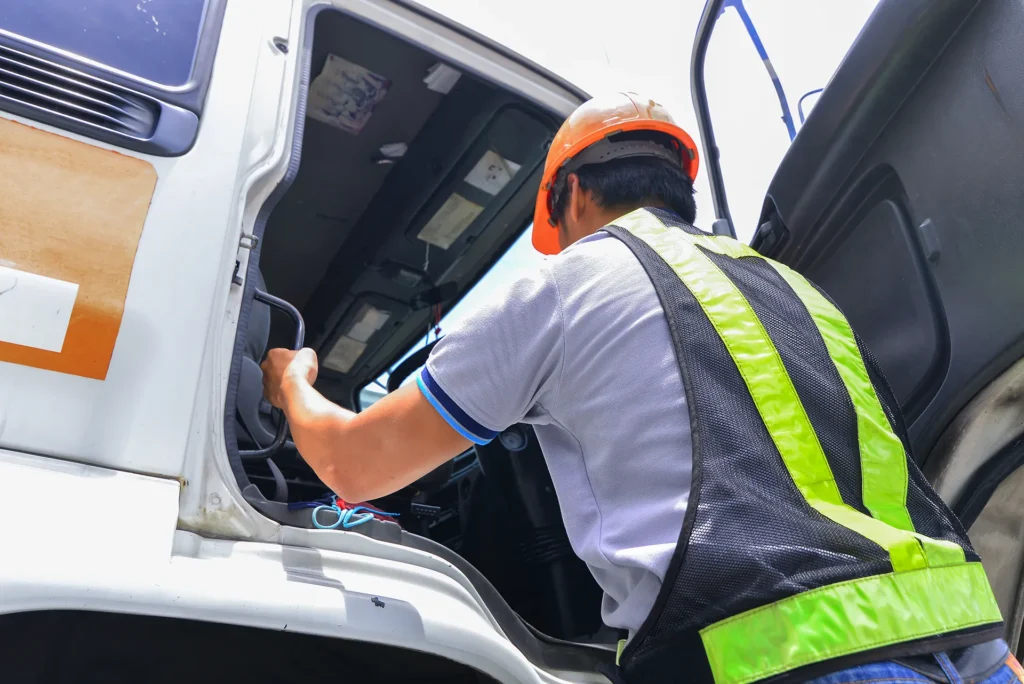
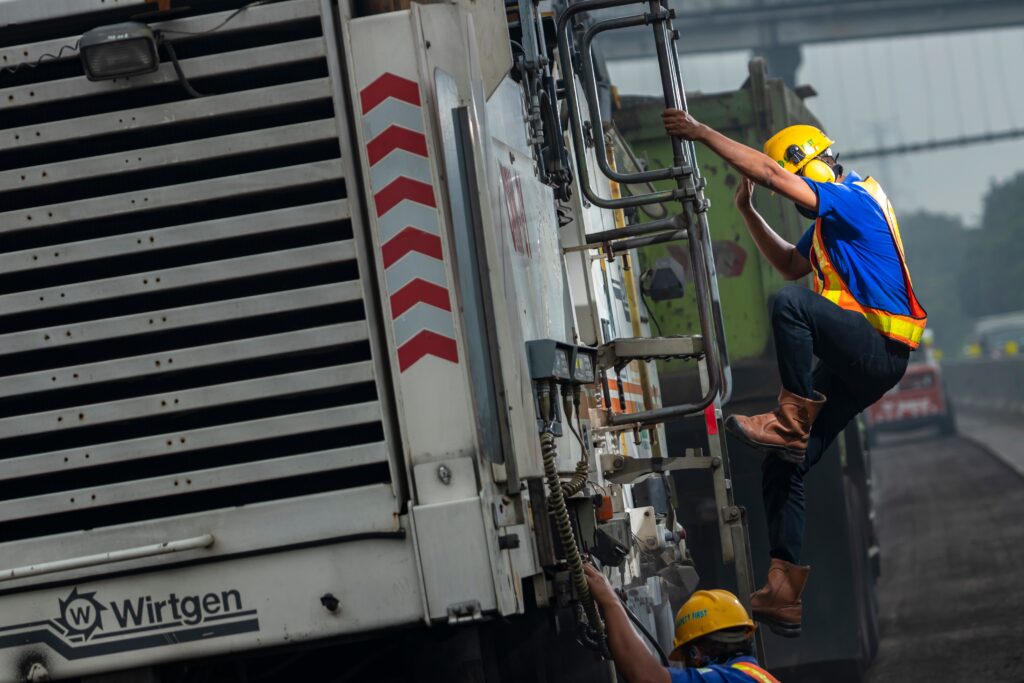
In direct connection to these specific risks, LGIS injury prevention consultants identified machine operation as the most vulnerable job role. The frequent requirement to access and egress elevates the chance of slips, trips, missteps and falls (STMF), with 70% of STMF resulting in a MSD injury. When we consider the extended periods of time machine operators also spend in the sedentary position, we can begin to understand the importance of putting an effective prevention and risk management plan in place. Below are some common issues encountered by our injury prevention team, with a particular focus on access and egress.

Managing common technique issues

  • Not opening the door fully into a locked position, resulting in movement when using the handrail
  • Using the steering wheel or seat as a secondary handrail
  • Twisting away from the machine before both feet are on the ground
  • Exiting the machine facing “outwards” rather than facing the machine
  • Missing the bottom step and “jumping” down to the ground

Maintenance and equipment check

  • Damaged steps, handrails and door hinges
  • Poorly maintained steps – loose rubber / flexi-steps, dented / damaged initial step
  • Initial step height > 500mm Initial handrails > 1600mm and secondary handrails > 2100mm
  • Dirt and grit on steps which reduces grip
  • No grip or damaged grip on handrails

Case study: how a safety procedure saved

$400,000 in workers’ compensation

Background

Following a major claim involving a local government’s workers’ compensation, LGIS’ regional risk specialist Chris Gilmour initiated a comprehensive review of injury-related expenses in his region. The incident involved injuries sustained by workers when entering and exiting plant equipment, leading to significant costs—approximately $420,000 to $460,000. The CEO was determined to prevent such costly incidents from recurring and tasked the safety team with finding an effective solution.

Challenge

The primary challenge was to reduce the number of injuries and associated costs stemming from a routine but risky task – getting in and out of plant machinery. Despite existing safety protocols, injuries persisted, indicating a need for a more targeted and practical approach.

Innovative solution

The safety team examined the manufacturer’s operator manuals for guidance. They discovered specific instructions on how to safely access and egress the equipment – information that had previously been overlooked. Leveraging this insight, the team developed a concise, one-page, dot-point Safe Work Procedure (SWP) for each type of plant. These SWPs outlined clear, step-by-step safety instructions, which operators were required to sign off on, ensuring accountability and understanding.

Implementation

The initiative involved creating approximately 100 SWPs covering various plant types. Once developed, all local governments (LGs) within the region adopted the procedures. Recognising the importance of accessibility, some LGs requested the SWPs be uploaded onto their online system, enabling workers to access the safety instructions anytime and anywhere – provided they had mobile coverage.

Results

The impact of this straightforward intervention was profound:
  • Cost savings – the annual workers’ compensation costs plummeted from nearly half a million dollars to between $12,000 and $20,000 – a reduction of approximately $400,000.
  • Reduced downtime – fewer injuries meant less time off work for recovery, maintaining productivity and operational efficiency at the local government level.
  • Cultural shift – the initiative fostered a proactive safety culture, with workers more engaged and aware of safe practices.

Broader impact

The success story has been shared across LGIS colleagues, inspiring similar safety initiatives elsewhere. It demonstrates how a simple, well-informed change can lead to substantial financial and safety improvements.

Conclusion

This case exemplifies the power of innovative thinking and leveraging existing resources to address safety challenges. By focusing on a routine task and providing clear, accessible guidance, the local government not only saved significant costs but also enhanced worker safety and organisational culture.

What can we do? Practical tips for operators to minimise risks

The recommendations for operators below are strictly general, please consult your operating manual for specific advice for each machine.

  • Always use three points of contact when accessing or egressing machinery and regularly check the condition of steps and handrails. Enter and exit the vehicle facing the machine, similar to ladder safety techniques.
  • When stepping out, wait until both feet are firmly on the ground before moving away.
  • Before parking, assess the terrain for hazards such as curbs, traffic, uneven surfaces, or wet/slippery areas. Complete daily pre-start checks on your machine and report any issues or damage immediately to your supervisor or WHS.
  • If you experience difficulty getting in or out of vehicles for any reason, report it to your supervisor or WHS.

Current guidelines and best practices?

Safe Work Australia recommends that sitting for more than seven hours in a day is excessive and can lead to health complications if not managed properly. Meanwhile, government regulations under the Minimum Conditions of Employment Act 1993 permit employees to work 38 hours per week plus reasonable additional hours. So, how can we use machinery ergonomics and good workplace practices to reduce risks for machine operators?

Scenario: Road sweeper operator

Imagine a sweeper operator responsible for cleaning roads, pathways, and curbs. About 90% of their work involves operating the machine from inside the cab, with the remaining 10% revolving around manual tasks like operating a leaf blower or high-pressure hose. Data shows that the most at risk body parts for this individual are the lower back, neck, and wrists (risks that stem from activities like climbing stairs or ladders, squatting, crouching, kneeling, and sitting for long periods). Let’s now discuss what this operator can do to minimise these risks?

Adjusting the seat

  • Place your feet flat on the cab floor and adjust the seat so your knees are at a 90 – 100° angle.
  • Ensure your seatbelt sits comfortably – not across your face or pulling you back.
  • Use lumbar support that is firm but comfortable, ideally from multiple levels (lower, upper and side support).
  • Slightly recline your backrest to an angle between 100-110°, supporting your back and thighs.
  • Adjust the seat so you can press each pedal without twisting or raising out of your seat. Set the seat pan depth so that you can fit two fingers between the back of your knees and the seat.

Steering wheel and mirrors

  • Adjust the steering wheel to suit your height, avoiding reaching or straining.
  • Hold the wheel at the 8 and 4 o’clock positions to reduce fatigue on longer drives.
  • Ensure you can see all mirrors clearly without twisting or slouching.

Access to controls

  • Adjust controls for easy, comfortable access

General health tips

  • Take regular breaks – movement helps reduce injury and fatigue. Safe Work Australia recommends avoiding sitting for more than 30 minutes continuously without a break.
  • Manage fatigue – during long drives/shifts, utilising the air conditioning, listening to music, and eating healthy snacks can help to keep you alter and avoid fatigue.
  • Stretch regularly – simple warm-up exercises each day can reduce muscle tension, improve flexibility, and boost overall health.

LGIS Resources to support you

Visit lgiswa.com.au and navigate to our injury prevention webpage home > Risk Management > Health and wellbeing program. Here you can find our machinery ergonomic self- assessment checklist, stretching posters as well as Injury prevention workshops and ergonomic assessments.

By following these tips and making use of available resources, operators can work more safely, comfortably, and efficiently – protecting their health and wellbeing on the job.

For members seeking further information on the best practices regarding machinery ergonomics you should contact LGIS injury prevention team or your regional risk specialist.

Share on Twitter
Share on LinkedIn

Other sections of this season's Risk Matters

CEO’s Message – Winter 2025

This year marks the significant milestone of the 30th anniversary of LGIS. It’s an opportunity to reflect on the remarkable journey we have undertaken together over the past three decades. Since our founding in 1995, LGIS has evolved from a practical response to emerging risks into a pioneering mutual scheme that proudly serves the diverse needs of Western Australia’s local governments.

Read more »

30 Years of LGIS

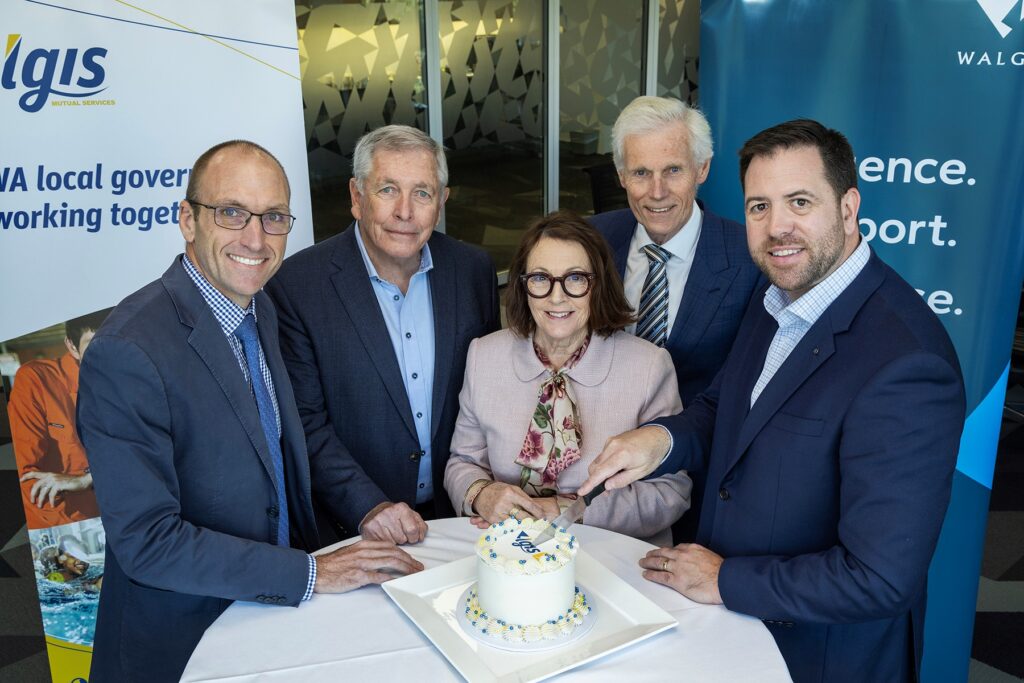
1 July 2025 marked an historic moment for LGIS, on the same day 30 years ago that the Scheme launched. A lot has changed over that time, but the core purpose remains – local governments working together through a mutual to protect their people, organisations and communities.

Read more »